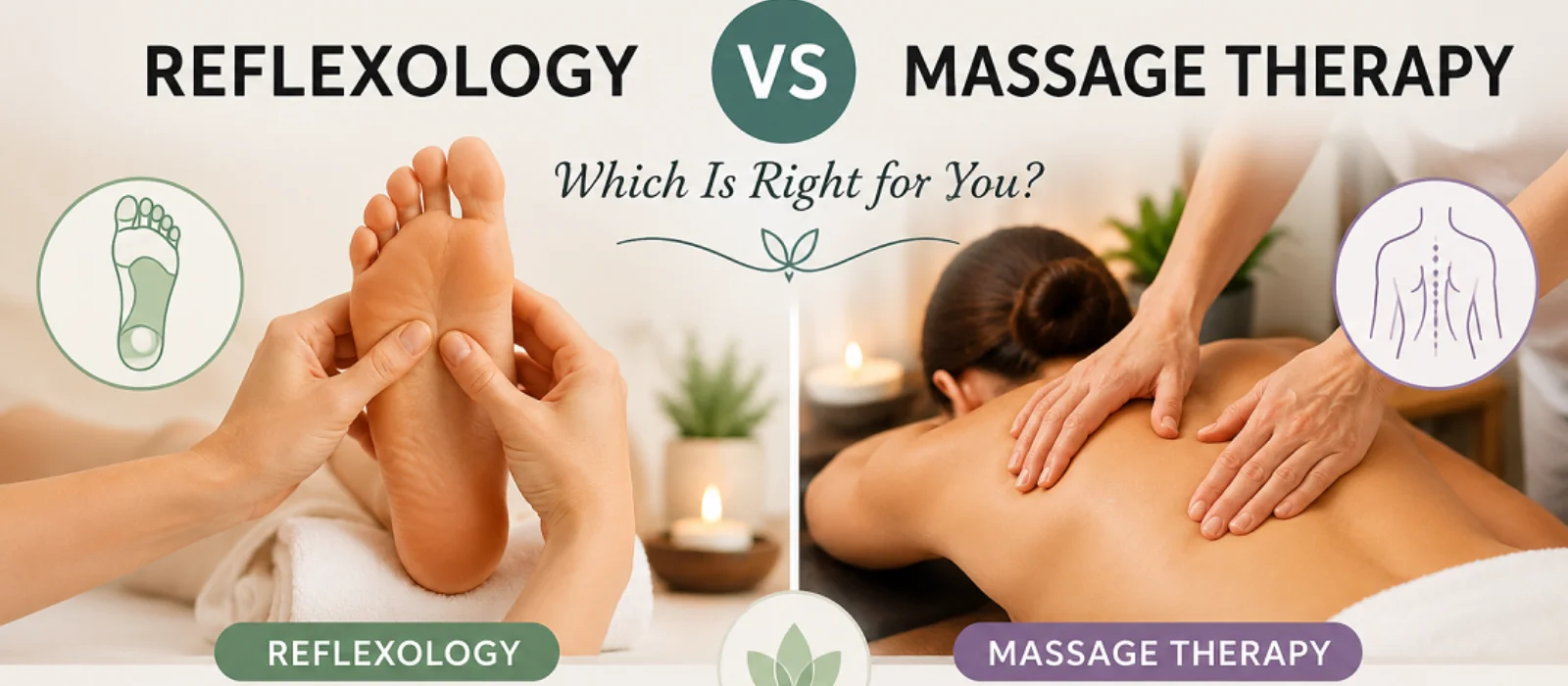

When you’re looking for a natural way to improve your wellbeing, it’s easy to wonder whether Reflexology or Massage Therapy is the better choice. Both treatments are popular across Cork for helping people relax, manage everyday stress, and support their overall health. However, they work in very different ways and are designed to meet different needs.
If you’re asking yourself, “Which therapy is right for me?”, you’re certainly not alone. Many first-time clients at Carrigaline Wellness Centre have the same question before booking their appointment.
The good news is that there isn’t a one-size-fits-all answer. The right treatment depends on your personal goals, whether you’re looking to ease muscle tension, unwind after a busy week, improve sleep, or simply take time to care for yourself.
This guide explains the differences between Reflexology vs Massage Therapy, the benefits of each, and how to decide which treatment is most suitable for your wellbeing journey.
Understanding Reflexology
Reflexology is a gentle complementary therapy that focuses on applying pressure to specific points on the feet, hands or ears. These points, known as reflex zones, are believed to correspond with different organs and systems throughout the body.
Unlike a foot massage, reflexology follows a structured approach based on these mapped reflex areas. The aim is not simply to relax the feet but to encourage deep relaxation and support the body’s natural ability to maintain balance.
During a reflexology session, your therapist carefully works on different areas of your feet using controlled pressure techniques. Many people describe the experience as deeply calming, with some noticing an overall sense of relaxation during and after treatment.
People often choose reflexology for reasons such as:
- Managing everyday stress
- Encouraging deep relaxation
- Supporting emotional wellbeing
- Improving sleep quality
- Taking time for self-care
- Complementing an existing wellness routine
While individual experiences vary, reflexology is valued by many people as a gentle, non-invasive therapy that supports overall wellbeing. It should be viewed as a complementary therapy and not as a replacement for medical advice or treatment.
Understanding Massage Therapy
Massage Therapy focuses directly on the body’s muscles, connective tissues and soft tissues. Through a variety of hands-on techniques, massage aims to reduce muscle tension, improve movement and promote relaxation.
Unlike reflexology, which works through reflex points, massage targets specific areas where muscles may feel tight, stiff or overworked.
Depending on your needs, different massage techniques may be used, including:
- Swedish Massage
- Deep Tissue Massage
- Sports Massage
- Relaxation Massage
- Therapeutic Massage
Each style offers its own benefits, but all aim to help the body feel more comfortable and relaxed.
People commonly book massage therapy to:
- Ease muscle tension
- Recover after exercise
- Improve flexibility
- Reduce stiffness
- Relieve everyday aches and pains
- Support better posture
- Unwind after stressful periods
For those who spend long hours at a desk or lead physically demanding lifestyles, massage therapy can become an important part of maintaining comfort and mobility.
The Key Differences Between Reflexology and Massage Therapy
Although both therapies encourage relaxation and wellbeing, they work in different ways and focus on different parts of the body.
| Feature | Reflexology | Massage Therapy |
| Primary Focus | Reflex points on the feet, hands or ears | Muscles and soft tissues |
| Main Purpose | Promote relaxation and overall wellbeing | Relieve muscle tension and improve movement |
| Treatment Area | Mainly the feet | Back, neck, shoulders, legs, arms or full body |
| Technique | Gentle pressure on reflex zones | Kneading, stretching and soft tissue techniques |
| Pressure Used | Light to moderate | Light to firm, depending on treatment |
| Best For | Stress, relaxation and general wellbeing | Muscle tightness, stiffness and recovery |
| Typical Session | Around 60 minutes | Usually 30–90 minutes |
| After the Session | Feeling calm, relaxed and refreshed | Muscles often feel looser and more comfortable |
Rather than thinking of one therapy as better than the other, it’s more helpful to think about what you’re hoping to achieve. If your goal is to address muscular discomfort, massage may be the better option. If you’re seeking deep relaxation and a holistic approach to wellbeing, reflexology may be a more suitable choice.
Benefits of Reflexology
One of the reasons reflexology has remained popular for many years is that it provides an opportunity to slow down and reconnect with your body.
Modern life often leaves little room for proper rest. Between work, family responsibilities and constant digital distractions, many people rarely experience genuine relaxation. Reflexology offers dedicated time to unwind in a peaceful environment.
Some commonly reported benefits include:
- Supporting relaxation during busy or stressful periods
- Helping the body feel calmer
- Encouraging better quality sleep
- Promoting emotional wellbeing
- Supporting healthy circulation
- Creating a sense of balance and overall wellness
Many clients also appreciate that reflexology is a gentle treatment suitable for people who may not enjoy firmer hands-on therapies.
It’s important to remember that reflexology complements conventional healthcare rather than replacing it. While many people find it beneficial as part of their wellbeing routine, results differ from person to person.
Benefits of Massage Therapy
Massage therapy is particularly valued for its ability to work directly with muscles and soft tissues.
Whether you’ve spent the day lifting, exercising, driving or working at a computer, muscles can become tight and fatigued over time. Massage helps release this tension while promoting greater comfort and flexibility.
Benefits may include:
- Reducing muscle tightness
- Improving flexibility and mobility
- Supporting recovery after physical activity
- Relieving everyday aches and stiffness
- Helping improve posture
- Encouraging relaxation
- Supporting overall physical wellbeing
Many office workers across Carrigaline and County Cork choose regular massage sessions to ease neck, shoulder and lower back discomfort caused by prolonged sitting.
Massage also provides valuable downtime, allowing both body and mind to relax together.
Which Therapy Is Better for Stress?
Stress affects everyone differently, so there isn’t a single answer.
If your main goal is to slow down, relax deeply and enjoy a calming treatment that focuses on overall wellbeing, reflexology is often an excellent choice. Many clients describe feeling peaceful and mentally refreshed after a session.
Massage therapy can also help reduce stress, particularly when tension has built up in the shoulders, neck or back. By easing muscular tightness, massage often helps people feel physically lighter and more comfortable.
Ultimately, both therapies can support stress management in different ways. Reflexology tends to focus on whole-body relaxation, while massage directly addresses the physical effects that stress can have on muscles and posture.
Which Therapy Is Better for Muscle Pain?
If muscle tightness, stiffness or physical discomfort is your main concern, massage therapy is generally the more targeted option.
Massage works directly on muscles, fascia and connective tissues, helping to reduce tension, improve circulation within the treated area and encourage greater flexibility. This makes it particularly suitable for people experiencing sore shoulders, lower back discomfort, sports-related tightness or posture-related aches.
Reflexology, while deeply relaxing, does not directly manipulate muscles. Instead, it supports general wellbeing and relaxation, making it a complementary choice for those looking to include holistic therapies as part of their wider self-care routine.
Can You Have Both Treatments?
Absolutely. In fact, many people choose to include both reflexology and massage therapy as part of their regular wellbeing routine because the two treatments complement one another.
Massage therapy focuses on the muscles and soft tissues, helping to ease physical tension, improve flexibility and support recovery. Reflexology, on the other hand, takes a more holistic approach by working on reflex points in the feet to encourage deep relaxation and overall wellbeing.
Some clients prefer to alternate treatments every few weeks, while others book reflexology during particularly stressful periods and massage therapy when they feel physically tight or uncomfortable. Your choice will depend on your lifestyle, daily activities and personal wellbeing goals.
If you’re unsure where to begin, speaking with a qualified therapist can help you decide which treatment is the best starting point for your individual needs.
How to Decide Which Therapy Is Right for You
There is no universal “best” treatment. The right therapy depends on what you hope to achieve.
Choose Reflexology if you:
- Want to reduce everyday stress and unwind.
- Are looking for a gentle, non-invasive treatment.
- Want to improve your overall sense of wellbeing.
- Have trouble switching off or relaxing.
- Enjoy holistic therapies that focus on the body as a whole.
- Are seeking regular self-care to support emotional balance and relaxation.
Choose Massage Therapy if you:
- Have tight or aching muscles.
- Spend long hours sitting at a desk.
- Experience stiffness in your neck, shoulders or back.
- Exercise regularly and want to support recovery.
- Need help improving flexibility and mobility.
- Prefer treatment that works directly on muscles and soft tissues.
Consider Both Treatments if you:
- Want to support both your physical and emotional wellbeing.
- Experience stress alongside muscle tension.
- Value a balanced approach to self-care.
- Enjoy making wellness part of your regular routine.
- Would like a personalised treatment plan based on your individual needs.
Many clients at Carrigaline Wellness Centre discover that combining reflexology and massage therapy provides the benefits of both relaxation and physical comfort, helping them feel refreshed in both body and mind.
Frequently Asked Questions
Is Reflexology better than Massage Therapy?
Neither treatment is better than the other—they simply have different purposes. Reflexology focuses on supporting relaxation and overall wellbeing through specific reflex points, while massage therapy works directly on muscles and soft tissues to relieve tension and improve mobility.
Can I book both treatments?
Yes. Many clients alternate between reflexology and massage therapy depending on how they are feeling. Combining both treatments can provide a balanced approach to relaxation and physical wellbeing.
Does Reflexology involve massage?
Not exactly. While reflexology includes pressure techniques on the feet, it is different from a foot massage. The treatment follows mapped reflex areas rather than massaging muscles.
Which therapy may help with stress?
Both treatments can help people feel more relaxed. Reflexology is often chosen for deep relaxation and emotional wellbeing, while massage therapy may help release muscle tension that builds up during stressful periods.
Which therapy is more suitable for muscle pain?
Massage therapy is generally the preferred option for muscle tightness, stiffness and physical discomfort because it works directly with muscles and connective tissues.
Is Reflexology painful?
Most people find reflexology relaxing. Occasionally, some reflex points may feel slightly sensitive, but treatment should always remain comfortable. Your therapist will adjust the pressure to suit your comfort level.
How often should I have treatment?
This varies from person to person. Some people attend monthly sessions as part of their wellness routine, while others visit more regularly during particularly busy or stressful times. Your therapist can recommend a schedule based on your individual needs.
How long does a session last?
Most reflexology and massage therapy appointments last around 60 minutes, although shorter or longer sessions may be available depending on the treatment selected.
Meet Deirdre Murphy
Deirdre Murphy is a qualified Reflexologist and Massage Therapist based at Carrigaline Wellness Centre in County Cork. She is passionate about helping people take time for themselves and supporting their overall wellbeing through professional, personalised care.
Drawing on her training in both reflexology and massage therapy, Deirdre tailors each treatment to the individual. Whether someone is looking to relax after a demanding week, ease muscular tension or simply enjoy dedicated time for self-care, her calm and thoughtful approach helps clients feel comfortable from the moment they arrive.
Deirdre welcomes clients from Carrigaline, Crosshaven, Douglas, Cork City, Ballincollig, Kinsale, Midleton, Carrigtwohill, Little Island, Cobh and surrounding areas across County Cork. Every treatment is delivered in a peaceful, welcoming environment where your comfort and wellbeing remain the priority.
Key Takeaways
- Reflexology and Massage Therapy are different treatments with different purposes.
- Reflexology focuses on reflex points to encourage relaxation and overall wellbeing.
- Massage Therapy works directly on muscles and soft tissues to ease tension and improve mobility.
- Both therapies can play an important role in supporting a healthy lifestyle.
- The right treatment depends on your individual needs, preferences and wellbeing goals.
- Many people benefit from including both therapies as part of their regular self-care routine.
- If you’re unsure which option is best, a qualified therapist can help guide your decision.
Conclusion
Choosing between Reflexology vs Massage Therapy doesn’t have to be complicated. Both therapies offer valuable benefits, but they support wellbeing in different ways.
If your priority is deep relaxation, emotional balance and a holistic approach to wellness, reflexology may be the ideal choice. If you’re experiencing muscle tightness, physical discomfort or reduced flexibility, massage therapy may better suit your needs.
For many people, the greatest benefits come from incorporating both treatments into a regular wellbeing routine. By listening to your body and working with a qualified therapist, you can choose the approach that best supports your health, comfort and quality of life.
If you’re still unsure which treatment is right for you, Deirdre Murphy would be delighted to discuss your individual needs and recommend the most suitable option. At Carrigaline Wellness Centre, every appointment is tailored to help you feel relaxed, supported and cared for in a calm and welcoming environment.

About the Author
Deirdre Murphy is a qualified Reflexologist and Massage Therapist based at Carrigaline Wellness Centre in Carrigaline, County Cork. A registered member of the National Register of Reflexologists Ireland (NRRI), she provides personalised reflexology and massage treatments designed to support relaxation, reduce stress, ease muscle tension and promote overall wellbeing.