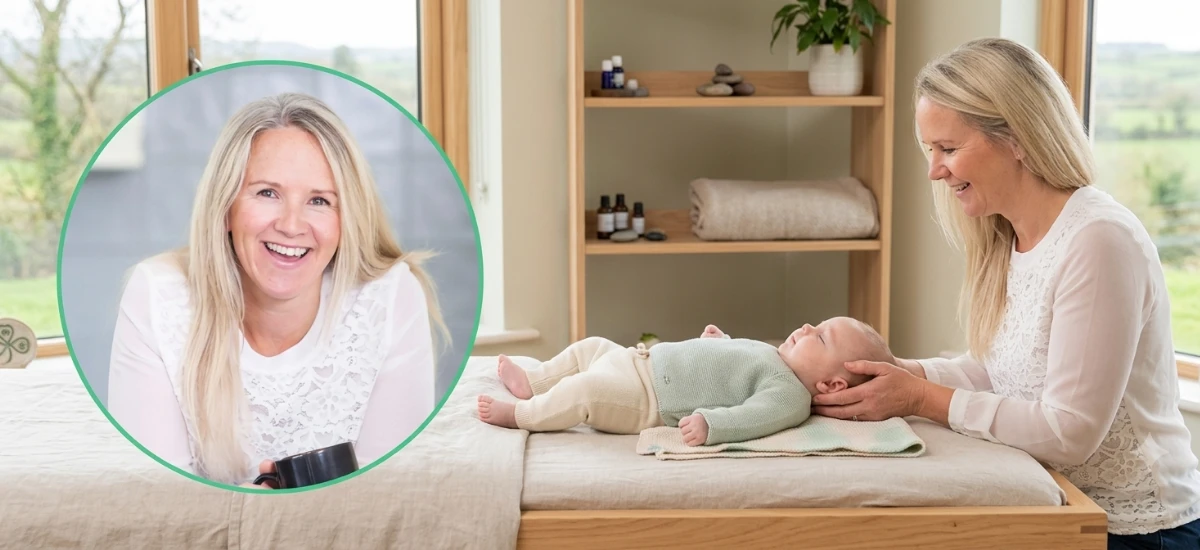


Having a baby brings plenty of lovely moments, but it can also bring a lot of worry.
If your little one is crying more than usual, finding it hard to settle, waking frequently or just doesn’t seem comfortable, you may find yourself wondering what else you can do.
Sometimes you’ve tried feeding, winding, rocking, cuddling and changing them, and they’re still unsettled.
Craniosacral therapy is one gentle complementary therapy that some parents choose to explore. It involves very light touch and a calm, hands-on approach.
If you’re thinking about trying it, it’s worth knowing what a session actually involves, what it may be able to offer and, just as importantly, what it can’t promise.
What Is Craniosacral Therapy for Babies?
Craniosacral therapy is a gentle hands-on therapy using light touch around areas including the head, spine and sacrum.
When working with a baby, the approach is particularly gentle. A practitioner will usually take time to talk with you first and may ask about your baby’s birth, feeding, sleep and general behaviour.
There’s no need for your baby to be made to stay in one particular position.
They may be held, lying comfortably or close to you during the session. The practitioner will pay attention to how your baby responds and work at a pace that feels comfortable.
Craniosacral therapy is a complementary therapy. It isn’t a replacement for medical care, and any health concerns about your baby should always be discussed with the appropriate healthcare professional.
Why Do Parents Consider Craniosacral Therapy for Their Baby?
There isn’t one reason why a parent might look into craniosacral therapy.
Sometimes it’s simply because their baby seems unsettled and the parent would like to explore a gentle form of support.
Parents may also ask about it when their baby:
- Cries frequently
- Seems difficult to settle
- Has trouble relaxing
- Has unsettled sleep
- Has feeding or latching difficulties
- Seems uncomfortable
- Has been through a difficult birth
For some parents, having a quiet appointment where someone listens properly can be reassuring in itself.
A good therapist won’t tell you that one session will solve everything. They’ll listen to what you’re experiencing and be honest about what is within their scope.
Can Craniosacral Therapy Help a Baby Who Cries a Lot?
A baby who cries a lot can leave you feeling completely worn out.
You may have tried everything you can think of. Sometimes you don’t even know what your little one wants.
There are many reasons babies cry. They may be hungry, tired, uncomfortable, windy, overstimulated or simply having a difficult day.
ccasionally, crying can also be a sign that something needs medical attention.
Some parents choose craniosacral therapy because they hope the gentle approach may help their baby relax.
It’s important to keep expectations realistic, though. Craniosacral therapy shouldn’t be presented as a treatment for unexplained crying.
If your baby’s crying is unusual, persistent or you’re simply worried that something isn’t right, speak to your GP or public health nurse.
You know your baby best.
Craniosacral Therapy and Baby Colic
Colic can be particularly hard on new parents.
When your baby has been crying for long periods and nothing seems to settle them, it can be exhausting. The lack of sleep doesn’t help either.
Some parents look at complementary therapies, including craniosacral therapy, when they’re looking for additional support.
At present, there isn’t enough strong evidence to say that craniosacral therapy treats or cures colic. Research into hands-on therapies for colic is still limited and mixed.
So if you decide to try it, it’s best to see it as one possible complementary option rather than a cure.
And don’t forget the basics. If you’re worried about your baby’s crying, feeding, weight gain or general health, talk to your GP or public health nurse.
Know in detail: Can Craniosacral Therapy Help a Baby With Colic?
Can It Support Baby Sleep?
Baby sleep can be a funny thing.
One night might be surprisingly good, and the next can feel like you’re up every couple of hours.
Some parents feel that their baby seems more relaxed following a gentle therapy session. That may make settling easier for that particular baby, but it doesn’t mean craniosacral therapy will make your baby sleep through the night.
Newborns wake regularly for feeds and comfort. Their sleep patterns also change as they grow.
If you’re really struggling with your baby’s sleep, don’t feel that you have to manage it on your own. Your GP or public health nurse can help you look at what might be going on.
Craniosacral Therapy and Feeding or Latching
Feeding doesn’t always go as smoothly as parents expect.
Breastfeeding can take time to get the hang of. Bottle feeding has its own challenges too. And when your baby isn’t latching well or seems unsettled during feeds, it can be very stressful.
Some parents ask whether craniosacral therapy could offer some complementary support.
If feeding is difficult, though, get proper feeding support first. A midwife, lactation consultant, public health nurse or other suitable healthcare professional can look at the practical side of things and make sure your baby is feeding well.
Craniosacral therapy, if you choose to explore it, should sit alongside that support rather than replace it.
Can Babies Have Craniosacral Therapy After a Difficult Birth?
Sometimes a difficult birth leaves parents with lots of questions.
Perhaps labour was long, there was an assisted delivery or your baby was born by Caesarean section. You may simply feel that the birth was a lot for both of you.
When you meet a craniosacral therapist, they may ask about your pregnancy and birth as part of understanding your concerns.
That’s useful background, but it’s important not to assume that a difficult birth has caused a particular problem that craniosacral therapy can fix.
If you have concerns about your baby’s health or development after birth, speak to your GP, public health nurse, paediatrician or another appropriate healthcare professional.
What Happens During a Baby Craniosacral Therapy Session?
Usually, it starts with a chat.
The therapist may ask about your baby’s birth, feeding, sleep and general behaviour. They’ll also want to know why you’ve decided to come along.
Your baby can stay close to you.
They may be held or lie comfortably while the practitioner uses very light touch and watches how your baby responds.
There’s no need to force things.
If your baby becomes upset, you should feel completely comfortable stopping, picking them up, feeding them or taking a break.
You should also be able to stay with your baby throughout the appointment.
A good therapist will explain what they’re doing rather than leaving you wondering what’s happening.
Is Craniosacral Therapy Gentle for Babies?
Craniosacral therapy for babies is based on a very gentle approach.
But gentle doesn’t automatically mean suitable for every baby.
Your baby’s age, health and individual circumstances all matter.
If you’re choosing a therapist, look for someone who has appropriate training and experience with babies and who understands when a concern needs to be referred to another healthcare professional.
You should never feel pressured to continue if your baby—or you—doesn’t feel comfortable.
Looking for gentle craniosacral therapy for your baby in Carrigaline?
Emer O’Reilly offers calm, gentle craniosacral therapy for babies in a supportive and welcoming setting at Carrigaline Wellness Centre. If you’d like to learn more or discuss whether a session may be suitable for your little one, get in touch with Emer.
👉 BOOK A BABY CRANIOSACRAL THERAPY SESSION WITH EMER O’REILLY
How Young Can a Baby Be?
This is something parents often ask.
There isn’t one age that is right for every baby. Whether a session is appropriate will depend on your baby’s individual circumstances, their health and the practitioner’s training and experience.
If your baby is very young, premature or has any health concerns, it’s sensible to speak with your GP, midwife, public health nurse or paediatrician before arranging complementary therapy.
What Should Parents Look for in a Practitioner?
This is worth taking your time over.
When you’re trusting someone with your baby, you want to feel comfortable with the person sitting in front of you.
Ask about their qualifications and experience working with babies.
If you’re looking for a craniosacral therapist in Ireland, you can check the Cranio Sacral Therapy for Babies Carrigaline | Emer O’Reilly.
Before booking, you might also ask:
- What training have you completed?
- Do you regularly work with babies?
- Are you insured for your practice?
- Can I stay with my baby during the appointment?
- What happens if my baby becomes upset?
- When would you advise me to speak to my GP or another healthcare professional?
A good practitioner should be happy to answer these questions.
Be wary of anyone promising to cure a condition or suggesting that complementary therapy can take the place of medical care.
When Should Parents Speak to a GP or Public Health Nurse?
If you’re worried about your baby, don’t wait for a complementary therapy appointment before getting medical advice.
Speak to your GP, public health nurse, paediatrician or another appropriate healthcare professional if you’re concerned about things such as feeding, weight gain, breathing, temperature, development, persistent vomiting, unusual behaviour or ongoing crying.
And if something just doesn’t feel right, it’s okay to ask.
You don’t need to have all the answers yourself.
Frequently Asked Questions
Is craniosacral therapy safe for babies?
Craniosacral therapy uses very gentle touch, but parents should still choose a suitably trained and insured practitioner with appropriate experience working with babies. If your baby has a health concern, speak with your GP or another healthcare professional.
Can craniosacral therapy cure colic?
There isn’t enough strong evidence to say that craniosacral therapy cures colic. It is better understood as a complementary therapy rather than a cure.
Can CST help a baby sleep?
Some parents may notice that their baby seems relaxed after a session, but there is no guarantee that CST will improve sleep.
Can a newborn have craniosacral therapy?
Some practitioners work with newborn babies. Suitability depends on the individual baby and the practitioner’s training and experience. If you have any concerns about a newborn, speak to your healthcare professional first.
Can parents stay with their baby during a session?
Parents should ask the practitioner about this before booking. Being able to stay close to your baby can help both of you feel more at ease.
How many sessions will my baby need?
There isn’t a standard number of sessions. A responsible practitioner should not promise a particular result or tell you that your baby definitely needs a set number of appointments.
About the Author
 Emer O’Reilly – Craniosacral Therapy for Babies in Carrigaline
Emer O’Reilly provides craniosacral therapy for babies in Carrigaline, Cork, offering parents a calm and supportive space to talk about their concerns and explore complementary therapy for their little one.
Her approach is centred around listening to parents, respecting each baby’s individual needs and keeping the experience as comfortable and gentle as possible.
You can learn more about Emer’s work through her practitioner profile at Carrigaline Wellness Centre.
A Final Thought for Parents
There really is no handbook for getting everything right with a baby.
Some days go smoothly. Other days, you can spend hours wondering why your little one won’t settle.
If you’re considering craniosacral therapy, take your time. Ask questions. Check the therapist’s qualifications and professional registration, and make sure you feel comfortable with the person you’re choosing.
And trust your instincts.
If you’re worried about your baby’s health, speak to your GP, public health nurse or paediatrician first. Complementary therapy can be explored alongside appropriate healthcare, but it shouldn’t take its place.
Health Disclaimer: Craniosacral therapy is a complementary therapy and is not intended to diagnose, treat or cure medical conditions. This article is for general information only and should not replace advice from your GP, public health nurse, paediatrician or another qualified healthcare professional.